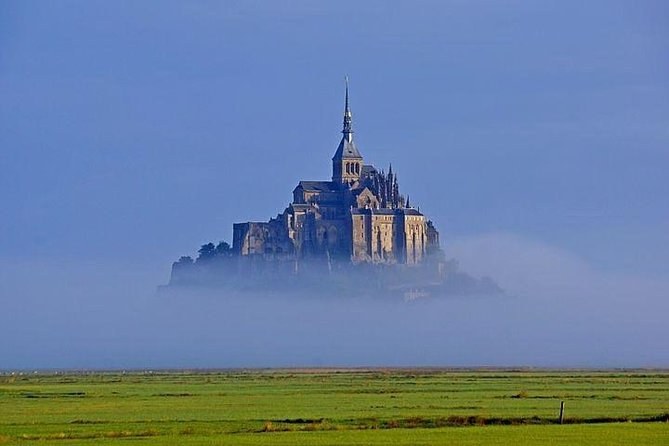
Mont St Michel Full Day Tour with a National Guide from Bayeux
Abbey entry includedMax 8Air-conditioned minibus
From $189 per person
The museum shut on 1 September 2025 for a renovation and is expected to reopen in autumn 2027. People still arrive in Bayeux planning to see it. The town’s Memorial Museum of the Battle of Normandy is open and is what most visitors to this coast actually want.
It is embroidery — wool stitched onto linen, not woven. Seventy metres of it, made within about a decade of 1066, almost certainly in England and almost certainly to Norman order. The history page has the rest of that story.
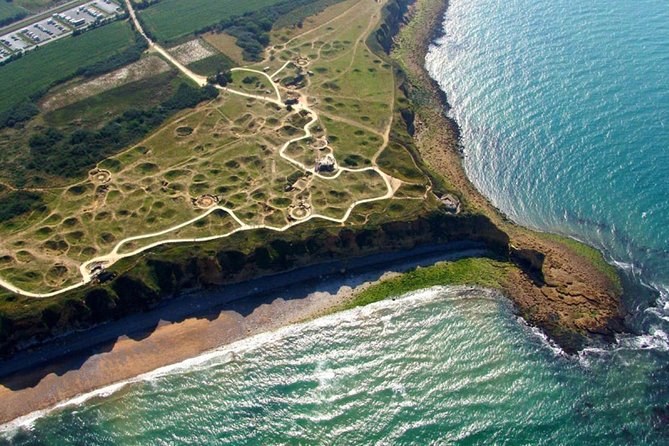
All five of them, plus Pointe du Hoc, the Longues-sur-Mer battery and the Normandy American Cemetery, which does not charge for entry or for parking. There is no “D-Day ticket” because there is nothing to sell one for.
The Northmen. A Viking leader called Rollo was granted the land around Rouen in 911 in exchange for keeping other raiders off the Seine, and within a century his descendants were speaking French and calling themselves Normans.
Which makes the direction of travel in June 1944 a reversal of the direction of travel in 1066, across the same water. The people who planned Overlord were entirely aware of it.
Two of them. No Channel port could be taken intact, so artificial harbours were built in Britain, towed across the Channel in sections and assembled off the beaches. The Arromanches one landed a substantial part of everything the campaign needed, and its caissons are still in the bay.
It was among the first towns liberated and the fighting moved past it quickly. That is why its medieval centre is intact while Caen was largely destroyed and Le Havre worse. Much of this coast is visibly post-war for the same reason.
And the water crosses the flats faster than most people expect. The tourist office advises being on site about two hours before high water if you want to watch it arrive. Never walk out onto the sand without a qualified guide.
You park on the mainland and take the free shuttle, which runs from half past seven in the morning until midnight, or you walk one of three footpaths in about forty to fifty minutes. The Mont-Saint-Michel page has the rest.
In the Orne, with a population of around two hundred people. Livarot, Pont-l’Évêque and Neufchâtel are all towns too. Four protected cheeses, four real places, all within a couple of hours of the beaches. See food and drink.
Apples instead. Cider is the everyday drink, pommeau is the aperitif, and Calvados is the brandy — named after the département where five of these guided days begin.
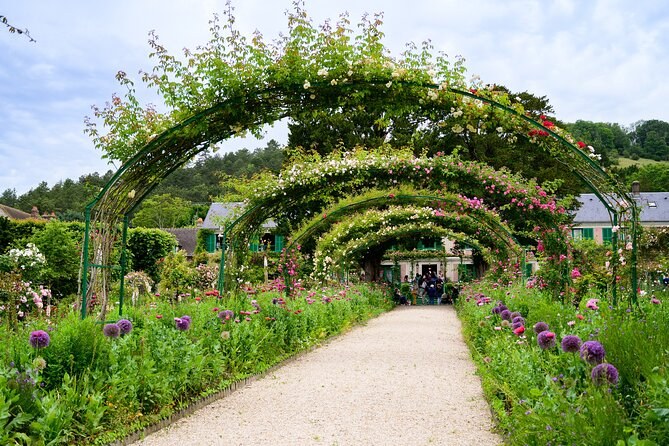
Giverny opens 1 April to 1 November 2026 and closes for the rest of the year. It is also 200 kilometres from Omaha Beach in the opposite direction, which is why nobody sells the beaches and the garden as one day.
Agneau de pré-salé grazes the flats around the bay, where salt water covers the grass twice a day. You will see the flocks from the causeway. It is on menus all round the bay, and it is the thing to order there.
Not in the numbers, but in what people write afterwards. The beaches face open water and the wind is constant, and spring visitors arrive dressed for spring. The weather page takes it month by month.
Most of them are things to know. Four will actually move a date or a booking, so they are worth having in one place.
| The fact | What it changes | Where to check |
|---|---|---|
| The tapestry museum is shut until 2027 | Book Bayeux around the Battle of Normandy museum instead | Visiting Normandy |
| Giverny closes from November to March | A winter trip cannot include Monet’s garden at all | Weather by month |
| The abbey drops to €13 on 1 October | A late-autumn visit is cheaper and quieter | Mont-Saint-Michel |
| The beaches and the bay are 130 km apart | They are two days, not one | The map page |
None of these is obscure and all four are published by the bodies that run the sites. They catch people out because nobody publishes them together, and because a plan made six months out is rarely rechecked a fortnight before departure. The right-hand column names the page on this coast that keeps each one current — visiting Normandy for the admissions, the weather page for the seasonal closures, the abbey page for the tides and the ticket, and the map for the distances.
Most of the fourteen are things you can stand in front of, which is the point of coming. Normandy tours and tickets reach the beaches, the bay and the garden between them, and each one prints what it covers and how long it gives you at every stop.
If you only have one day, spend it on the American sector: Omaha, Pointe du Hoc and the cemetery are within twenty minutes of each other and they carry most of the story. If you have two, put the bay on the second and see the tide do the thing in fact eight. Normandy Excursions sets the departures side by side, and things to do says what each stop actually takes.
From $189 per person
From $165 per person
From $325 per person